Handling a Self-Managed Product Team
For the lucky product managers working with self-sufficient teams


Does your product team operate independently from the product strategy?
If so, your self-managed product team probably questions the value of product management. Your self-sufficient product team has been delighting customers for years by themselves. How can a product manager possibly add value when the product team is so aligned with customer needs?
It is true that injecting a product manager into this tight customer relationship isn't going to add value to the product delivery.
Then how does a product manager add value to a self-managing product team?
What Does a Self-Managing Product Team Need from Product Managers?
Your customer-centric product team is working closely with customers and doesn't need anyone in the middle. What is the use of a product manager in this case?
From the perspective of the product team, there is very little needed from a product manager. There certainly is no need for another leader on the team - the team has been prioritizing requirements just fine.
This is where your product management detective skills come into play. Using your discovery skills, explore these opportunities to serve the team:
Are there repeating issues that the team accepts as normal but waste time?
Do the sales teams communicate the value of the product to customers?
Does the team know what competing products offer?
Does anyone maintain a business forecast? Is business growing or shrinking?
Are there frequent heroic efforts to prevent a customer satisfaction issue?
The great product teams are customer-centric and self-managed. Here is what you are likely to find as a result of your investigation:
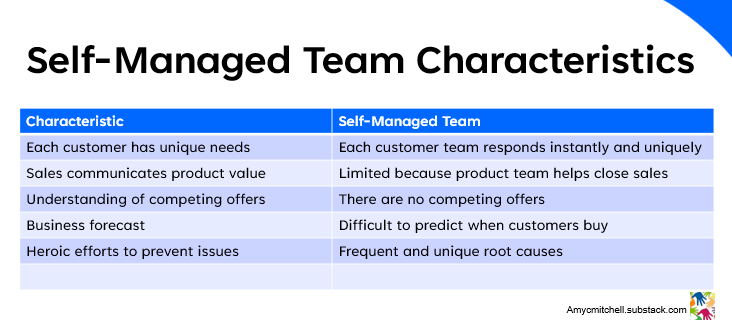
Now what do you do with the results of investigating your product team? You DON'T blast it out on email and you don't redo your roadmap. Remember your product team isn't hurting for product management information like competitive material, a business forecast, or efficiency improvements.
Knowledge is power - let's dig into what you do with the results of your investigation.
The top strategies for product managers to support their self-managed product teams are:
Demonstrate your value daily
Bring incremental investment to the team
Increase visibility into product management contributions
These strategies are where you focus on winning your place in serving the product team. You still are expected to excel at strategic thinking, great communications, and the other business expectations of product managers in your organization.
Strategy 1: Demonstrate Your Value
When your role is a support role instead of a controlling role, then your leadership comes from your value. You aren't sought out for decisions yet. You are sought out when you are a significant resource that adds value. And when you are sought out, you respond quickly and in a positive manner.

The keys to demonstrating your value:
Take action instead of talking - show your product management value through actions
Collaborate on shared goals - join forces with your product team
Follow through on commitments - finish your work and let the team know you are done
You might be thinking that product management is already hard and piling on value demonstration is unreasonable. Meaningful collaboration needs a two-way understanding of value. Therefore demonstrating your value leads to strong relationships across the product team.
There is another way product managers can add value to the product team - getting extra product investment.
Strategy 2: Incremental Investment
By looking at the total business and market, product managers can justify incremental investment for a self-sufficient product team. While the self-managing product team is closely focused on each customer, there is little time to investigate common solutions for multiple customers.
A product manager can serve the product team by looking across multiple customers and markets. With this broader view, a product manager can show the payback of an incremental investment.
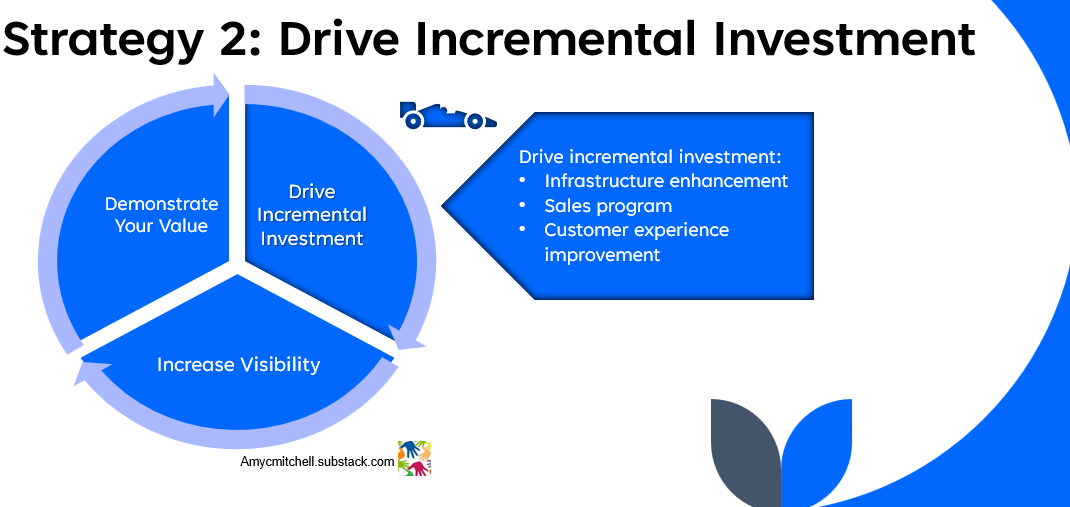
Incremental investment examples:
Infrastructure investment for features by working with stakeholders
Getting a sales push for a new business opportunity
Business opportunity resulting from a test program
Improve the customer experience for a segment of customers
These are a few examples where product managers drive low-risk, incremental investment.
The final strategy is making the incremental value apparent to the rest of the organization.
Strategy 3: Increase Visibility
The self-managing product team has plenty of visibility to the whole organization as they heroically deliver results from challenging customers.

A product manager can bring a different level of visibility to the organization:
Celebrate product improvements from new customers
Communicate on a competitive threat response
Lead a high-visibility product initiative
Over time these product-level success stories show the breadth of a product win in comparison to a single customer reference.
Through sharing updates and celebrating product accomplishments, you increase the visibility of the product team.

Conclusion - Working with Self-Managed Teams
The fiercest of self-managing product teams need strong product managers to grow business and increase efficiency. Product managers who are empathetic, clear communicators, and flexible can thrive with self-sufficient product teams.
The strategies to contribute to a self-managed team are:
Continuously demonstrate the value-add of product management
Bring additional resources and funding for the team
Make the product achievements more visible to the team and stakeholders
Self-managed product teams need equally strong product managers.
Want to know what happened after a recent article? Premium subscribers get a peak behind the scenes of a recent newsletter. Last week’s backstory was about developing product management judgment. Another Tip for Developing Good Judgment
Connect to Amy on LinkedIn, Threads, Instagram and X/Twitter
Discussion about this post