More Strategies for Done Means Done
Completing tasks matters more than you think - Part 2


After last week's article - Stop Spinning Your Wheels and Make Progress - were you looking for more strategies to reduce your work in progress?
Last week's article discussed:
The definition of Done
Don't worry about judgment, worry about delays
New habits to keep work flowing
In response to that article, I got bonus suggestions about completing product management work:
Use version controls to drive incremental completions
Regular requirements review sessions
Personal Kanban for prioritization
Let's dive into these extra strategies for Done Means Done.
Add Versioning to Deliverables
Putting your deliverable under version control is an effective way to communicate about incremental changes. This can be used on a "living document" and a one-time use document.
Example: Living Document - Your requirements document
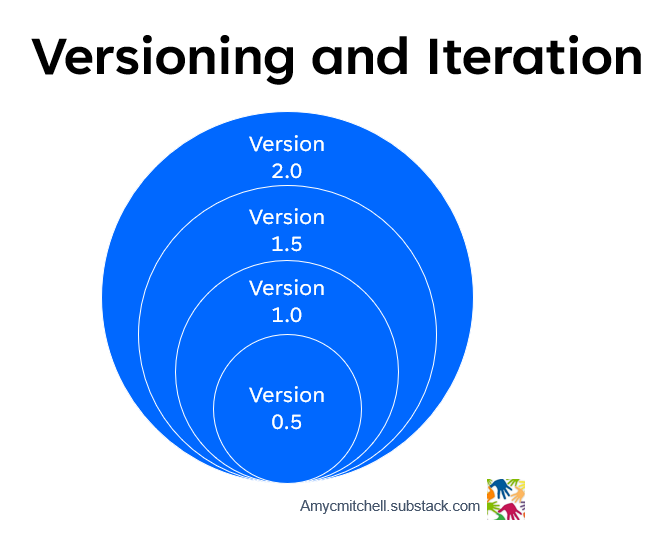
If you have features that span multiple releases, then a living requirements document comes in handy. Here are possible versions of this document:
Version 0.1 Concept overview, addressable market, high-level requirements
Version 0.5 Adds channels to market, customer journey, and business case
Version 1.0 requirements and acceptance criteria added
Version 1.5 updates after stakeholder review
Version 2.0 updates after planning is done
For the next iteration, you would update the requirements and any market-related changes.
Example: One-time use document - Consolidated customer feedback
When you are considering a new product initiative, a consolidated view of customer drivers, problem situations, and interview feedback is a catalyst for collaboration on possible solutions. Product leaders are in the best position to communicate about the customers' perspective in a one-time document.
Here are possible versions of this document:
Version 0.5 Rough table summarizing customer conversations
Version 1.0 Consolidated feedback and summary findings
Version 2.0 After follow up meetings with customers and engineering
You are likely breaking your work down into small pieces. With versioning, you can align the version to each step in your work breakdown.
Regular Review Sessions
Keeping momentum on your work-in-progress is a valuable way to support your workflow habits for Done Means Done. Schedule review sessions with the receivers of your workflow items.
Starting the collaboration as early as possible speeds up the completion. Do not fear negative feedback on your in-progress work! Your team wants to help get the work item done and see their feedback incorporated.
Staying focused on clear information that your product team needs is the best result. No one is going to remember that you left something out of the first draft!

Personal Kanban for Priorities
Frequently product initiatives have internal or external dependencies and you can be in a holding pattern for your work item. To your team, any delay is going to hold up progress.
Create a Personal Kanban to stay on top of your initiatives. Below is an example.
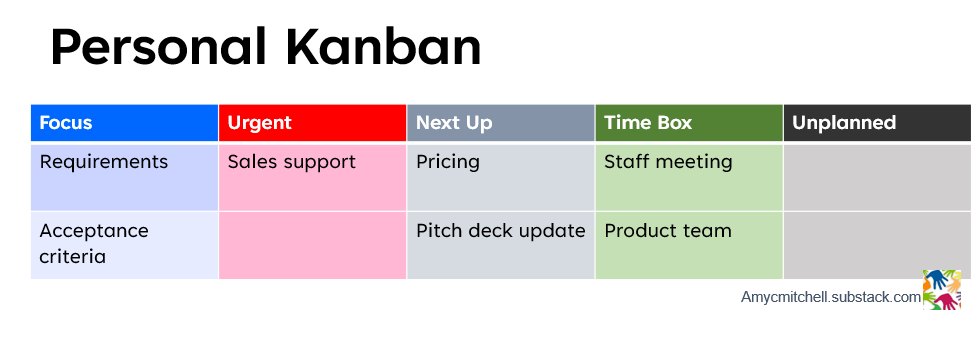
In this example, you keep momentum on each Focus Project item. If you have a dependency, then you can trigger action if the delay is too much. If there is a big delay and you can't work around it, then move the work to Next Up.
Any movement from one category to another category triggers you to announce a change to the affected team members. This would include finishing something or moving something to Next Up.
Conclusion - Tying Together Done Means Done
Completing tasks in your product workflow matters more than you think. Many dependent teams are waiting to build on your product management outputs.
The steps to keep product workflows moving smoothly are:
Stick to your own definition of done
Worry about delays, don't worry about judgment
Strong habits to finalize work and communicate it is done
Add versioning to your deliverables
Schedule review sessions to drive collaboration
Maintain a Personal Kanban to stay on priority work

With these steps, you can establish habits that support Done Means Done. When you hit setbacks, then you have versioning, review sessions, and a Personal Kanban to overcome product management challenges.
Connect to Amy on LinkedIn, Threads, and Instagram.
I really like this Done means Done series. Lots of actionable ideas!