
How to Handle Visionary Leaders Without Losing the Team
Practical strategies for product managers caught between vision and execution


Stephen, your team’s most visionary product leader, keeps pressing finance to rewrite accounting policies. All to preserve a few margin points. It feels impractical, and everyone worries it will stall an initiative that’s already behind. You leave the meeting shaking your head. How do you keep momentum without getting lost in a side battle?
You’re caught in the middle. Stephen’s ideas have real potential, but how do you keep momentum without getting bogged down in a side battle?
Most product managers eventually face a “Stephen moment”: a visionary leader pushing for something that feels overwhelming, impractical, or just plain frustrating. The temptation is to resist hard. But there are better ways to stay productive and keep the vision alive.
This article explores how to recognize visionary product leaders and practical strategies to work with them.
Spotting a Visionary Product Leader
Know anyone like Stephen? A product leader brimming with ideas, always inventing what’s next — but impatient with the details of how to build it.
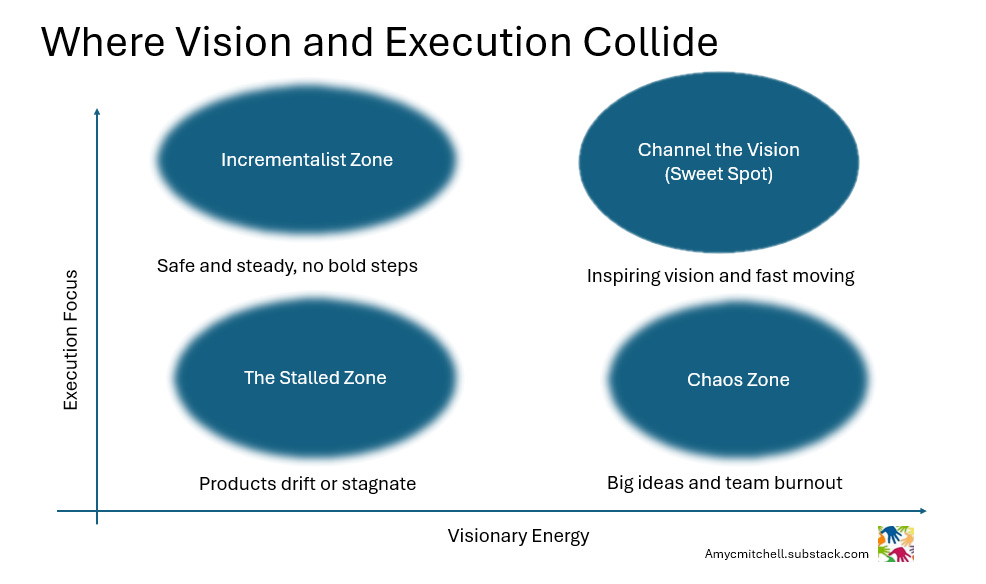
Marty Cagan and Shreyas Doshi describe these leaders as having the superpower of “seeing what others can’t.” Their challenge? Scaling those ideas and bringing others along.
Visionary leaders fight so hard to protect their vision because they fear it being watered down. Recognizing this instinct makes it easier to work with them productively.

Practical Tip 1: Turn Big Ideas Into Next Steps
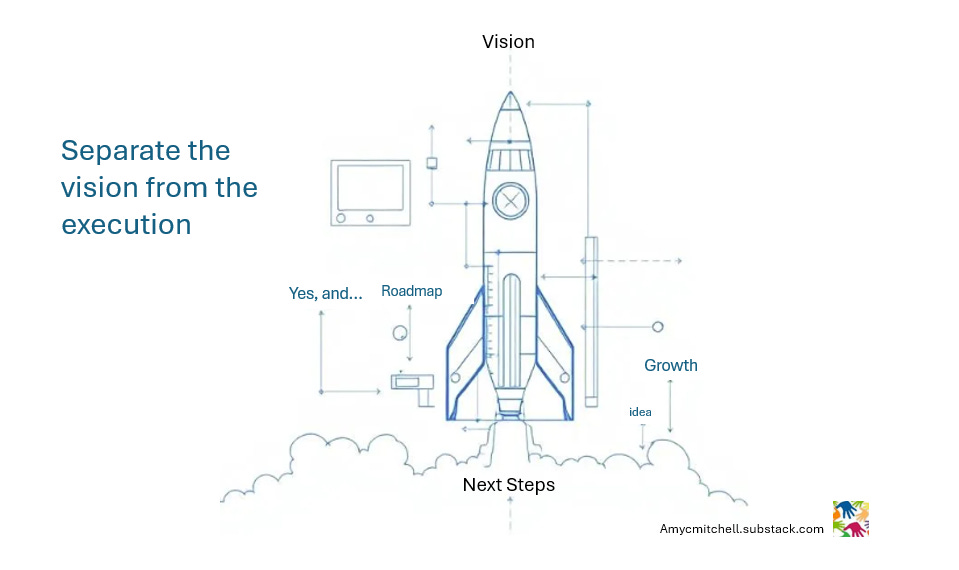
Expecting a visionary to map out roadmaps, milestones, and experiments is a recipe for frustration. Their genius is inventing the future, not breaking it down into deliverables.
Your role as a product manager is to translate. Suggest the next steps, connect the vision to actionable milestones, and free them to keep innovating.
When teams insist that the visionary “behave like everyone else,” it creates resistance and slows progress. A better partnership lets the visionary see what's next, while you ensure the work moves forward.

Practical Tip 2: Say "Yes, and…' Instead of No
Visionaries can’t stand seeing their ideas diluted. If you block them outright, they’ll usually double down. A better move: say “Yes, and…”
Examples:
Visionary wants to change accounting rules → “Yes, and while you work on that, the team can move ahead on delivery.”
Visionary disagrees with leadership → “Yes, and let’s document the tradeoffs for later review.”
Visionary isn’t responding to questions → “Yes, and this question ties directly to your vision — it needs your perspective.”
This way, the visionary stays part of the solution without derailing the team.

Practical Tip 3: Buffer the Team From Whiplash

Visionaries thrive on jumping from idea to idea. That’s part of their value — but it can leave teams reeling.
As a product leader, buffer the changes. Write down the agreed direction, and when new ideas pop up, log them and align on timing before sending them to the team. Often, the “urgent new request” is actually a future idea.
This keeps the team focused, avoids misunderstandings, and channels the visionary’s systems-level thinking into the right time horizon.

Practical Tip 4: Build Trust by Showing Impact
If you’re lucky enough to work with a visionary leader, don’t just tolerate their ideas — amplify their strengths.
Highlight how their vision translated into outcomes. Share successes that connect directly back to their push. This builds trust, and trust makes it easier to guide them when execution or people issues arise.
Conclusion: Leading From Vision to Execution
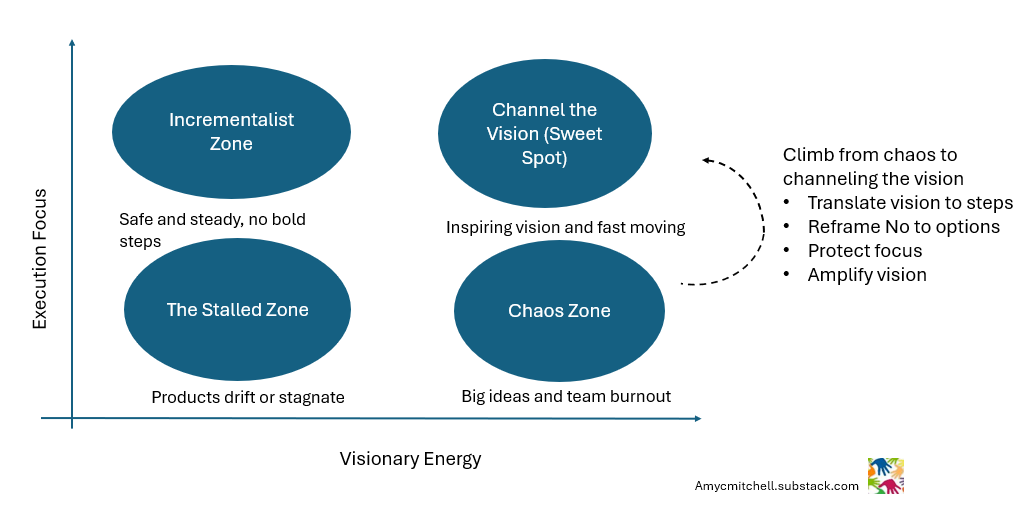
In Stephen's case, these strategies worked:
Translate vision into steps: You showed the team was ready to start the initiative.
Reframing resistance: You suggested Stephen could keep working with finance while the team made progress.
Protect focus: You reminded him that pricing could be adjusted later depending on financial outcomes.
The team kept momentum, and the product moved forward. This is the heart of working with visionary leaders: not taming them, but channeling their energy from vision to execution.
Visionary leaders keep organizations from settling for incremental products. They don’t need taming — they need channeling.
By translating big ideas into steps, reframing resistance, protecting the team from disruption, and building trust, you can ride the wave of a visionary leader.
Handled well, visionary energy isn’t a roadblock — it’s rocket fuel for product success.
Looking for more practical tips to improve your product management skills?
Free product manager resources from Product Management IRL. Business fluency guide, resume checklist and presentation tips.
Become a paid subscriber and get more weekly tips. Last week’s article: Being Reliable and Keeping Your Focus
TLDR Product listed Product Management IRL articles recently! This biweekly email provides a consolidated list of recent product management articles.
Connect with Amy on LinkedIn, Threads, Instagram, and Bluesky for product management insights daily.