What Senior Leaders Really Look for in Product Manager Performance
The Art and Science of Evaluating Product Managers


Intro
What separates good product managers from great ones? It’s a question every PM encounters, yet the answer often feels elusive. While metrics like roadmap delivery, feature success, and customer satisfaction are important, they only scratch the surface of what defines exceptional leadership.
Great product managers stand out because of how they lead, make decisions, and create lasting impact—qualities that can be harder to measure but are impossible to ignore.
This week we have a guest, Ahmed Wafaey, Senior Director of Product Management at Delivery Hero. After a decade of evaluating PMs and building product teams at Uber, Boeing, Ericsson, and Wayfair, he has developed a keen eye for identifying what drives sustained success in product management.
In this post, Wafaey shares his framework for evaluating and developing the leadership skills and decision-making capabilities that set high-performing product managers apart. If you’ve ever wondered how to align your strengths with what senior leaders truly value, this is your roadmap for growth.
Wafaey’s Post
"We hit every metric. The team is destroyed."
These words, spoken by a senior product manager at a leading tech company, stopped me cold. They capture the fundamental paradox in modern product management: in pursuit of measurable success, we've created systems that simultaneously celebrate victory and destroy value.
Let's be honest: most product management evaluation is theater. We pretend shipping features equal success. We celebrate OKR completion as if checking boxes magically creates value. And worst of all? We nod approvingly at stakeholder satisfaction scores while our teams silently drown in technical debt and rushed decisions.
If you're nodding along to today's "best practices" of PM evaluation—tracking shipping velocity, measuring OKR completion, monitoring stakeholder satisfaction—you might be perpetuating this broken system.
When Metrics Mislead
Because metrics are seductive, they're clean, quantifiable, and make great presentations. But they only tell half the story. We've mistaken the byproducts of success for success itself.
You know what? your highest-performing product manager by metrics might be your most destructive leader. So, we're breeding a generation of product managers who excel at playing politics but struggle to create genuine value. Look closely and you'll see what's really happening:
We're incentivizing short-term thinking while pretending to value long-term strategy
We're rewarding visible action over thoughtful restraint
And here's the most dangerous part: this system feeds itself. Each 'success' within it becomes evidence of its effectiveness, creating a perpetual cycle where mediocrity masquerades as excellence.
The ELEVATE Framework: A Radical Rethinking
Let me share something that has been keeping me up at night. After a decade of studying hundreds of product decisions and coaching product managers from startups to Unicorns, I've noticed something that challenges everything we're taught about "good" product management.
The most successful product managers I've worked with don't follow the playbook. In fact, they do exactly what conventional wisdom warns against:
They ship less frequently—yet their impact is more profound
They say "no" more than "yes"—yet they're seen as the most collaborative
They prioritize long-term health over quick wins—yet they advance faster
They remove features instead of adding them—yet users love their products more
This insight led to a critical question: How do we evaluate product managers in a way that captures both the visible and invisible dimensions of their impact?
The answer is ELEVATE—a framework born from real battle scars and breakthrough moments. It transforms how we think about product leadership by examining three critical dimensions that separate good PMs from exceptional ones.
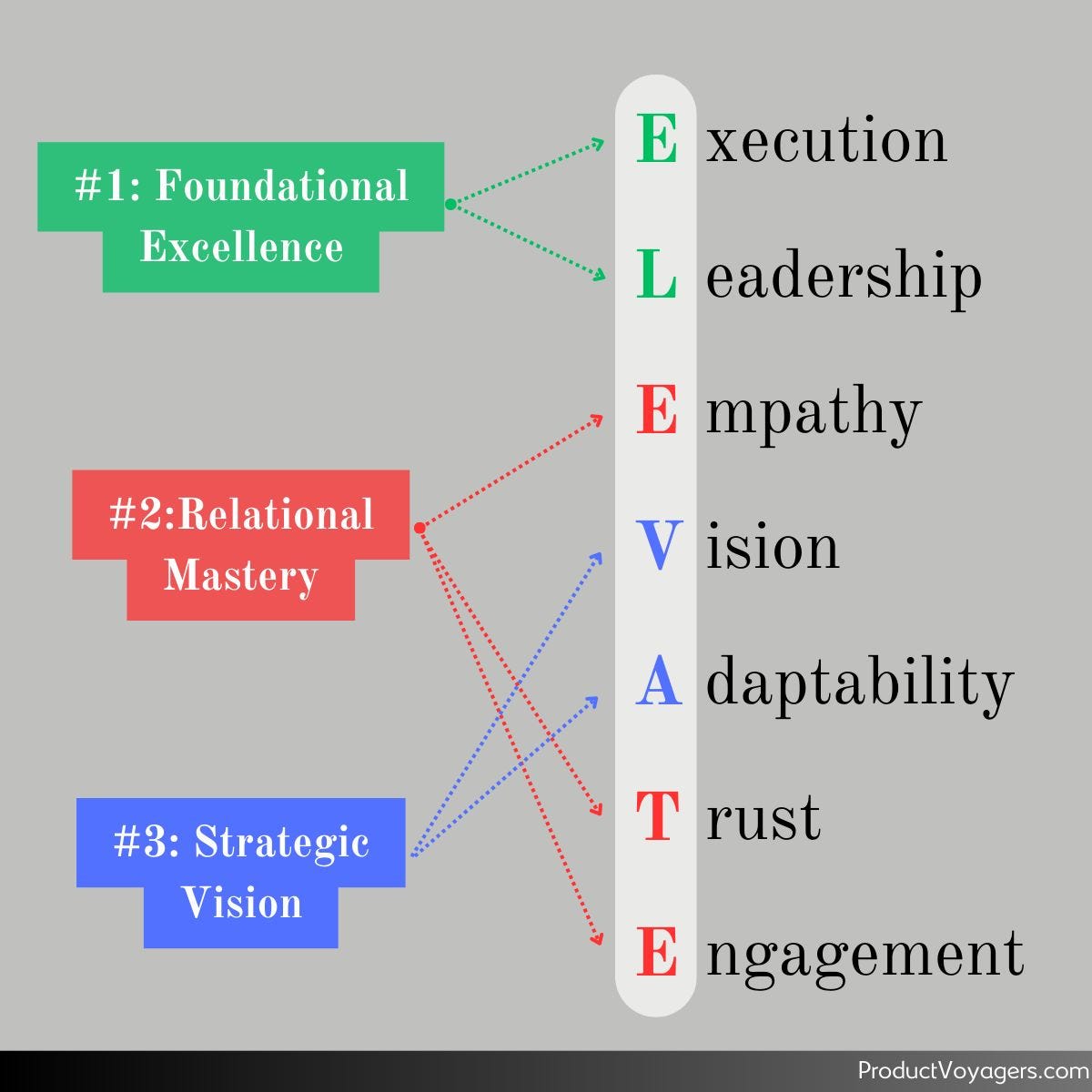
What follows are raw moments I've witnessed in conference rooms and late-night war rooms—pivotal decisions where metrics pointed one way, but true leadership meant choosing another path. The names are changed, but every dilemma and outcome is real, revealing what exceptional product leadership truly looks like in the trenches.
#1 Foundational Excellence: The Bedrock of Product Leadership
Core capabilities that drive high-quality outcomes and team performance.
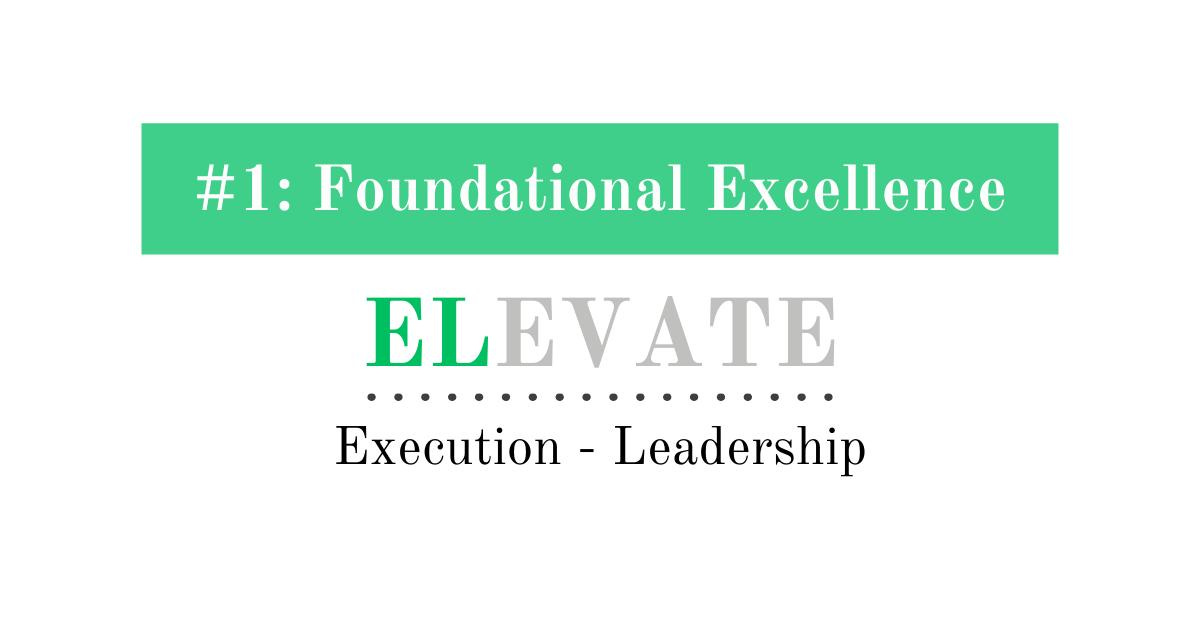
Execution: Beyond Shipping Speed
A product manager facing intense pressure to launch a critical payment feature proposes a four-week timeline instead of the demanded two weeks, including security audits and comprehensive testing. The result? Zero payment failures and a template for future deployments.
What exceptional PMs do: Instead of racing to meet arbitrary deadlines, they replace "ship fast" with "ship smart." These leaders optimize for long-term velocity by building the right processes, documentation, and quality standards that compound over time. They understand that thoughtful preparation and proper execution create sustainable speed.
Leadership: The Invisible Force Multiplier
When Sarah discovers her migration would disrupt enterprise customers, she owns the oversight immediately and proposes a safer approach. Her team voluntarily refines the plan, and the migration was completed without issues.
What exceptional PMs do: Exceptional product managers own failures completely while sharing successes broadly with their team. Rather than optimizing for stakeholder perception, they focus on building deep team trust and fostering technical excellence. They transform potential crises into opportunities for learning and improvement, setting standards that elevate the entire organization.
#2 Relational Mastery: The Heart of Product Excellence
Human elements that foster collaboration transform a competent PM into a trusted collaborator.
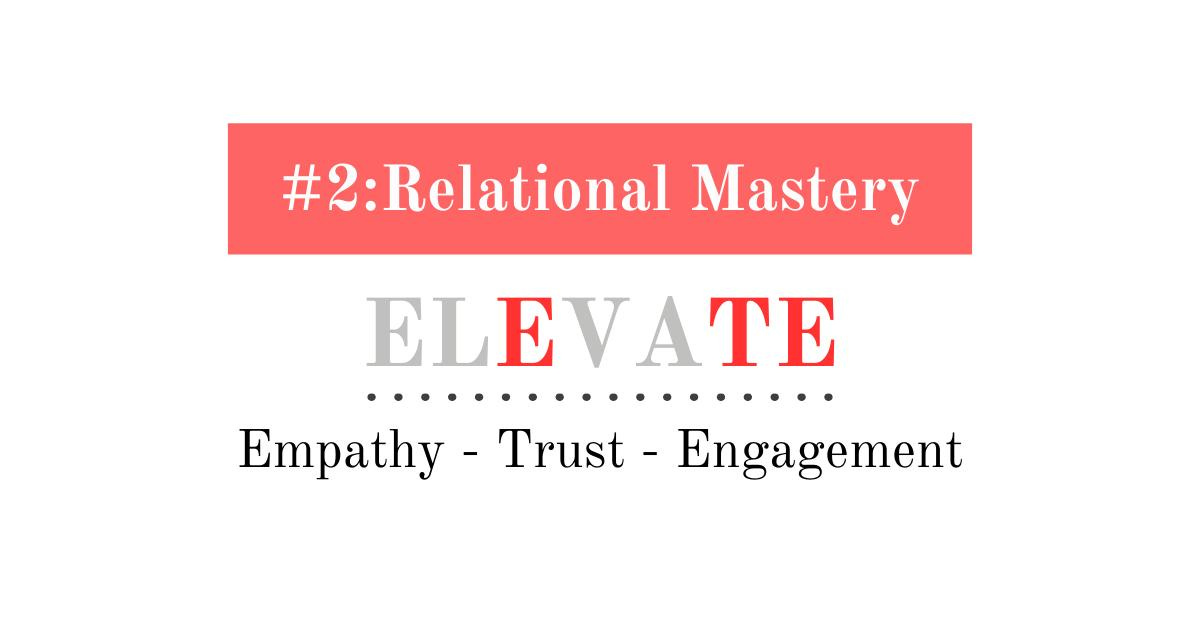
Empathy: The Foundation of Trust
An experienced engineer raises scaling concerns two weeks before launch. Instead of dismissing it as scope creep, the PM spends a day pair programming to understand. The resulting architectural improvements lead to 3x better performance.
What exceptional PMs do: Great product managers treat engineering wisdom as vital product intelligence, not mere implementation details. They act decisively on technical concerns even when it complicates the business timeline. By deeply understanding their team's perspectives and concerns, they transform technical challenges into opportunities for innovation.
Trust: The Currency of Innovation
A product manager halts a launch mid-way after discovering accessibility issues. Despite pressure to "patch it later," they push for a complete audit. The result? QA proactively flags concerns, designers share early prototypes, and the team ships inclusive features from day one.
What exceptional PMs do: The best product managers consistently choose to do what's right over what's expedient, especially when it's uncomfortable or costly in the short term. They build systems and processes that prevent future issues, turning potential setbacks into opportunities to build trust. Their commitment to quality and inclusivity becomes contagious, inspiring teams to address challenges proactively.
Engagement: Beyond Surface-Level Participation
A product manager notices their senior developer unusually quiet during sprint planning. Instead of pushing on, they introduce a pre-planning survey asking "What keeps you up at night about our product?" The responses reveal unexpected scaling concerns that transform a routine feature into a foundational improvement.
What exceptional PMs do: Forward-thinking product managers create spaces where silence speaks and concerns transform into innovations. They actively seek out diverse perspectives and make it safe to raise issues early. By fostering genuine engagement, they tap into their team's collective wisdom and create an environment where breakthrough ideas emerge naturally.
#3 Strategic Vision: Shaping the Future
Forward-looking capabilities that turn uncertainty into strategic opportunities.
Vision: The North Star
Tony Fadell approached the iPod challenge differently. Instead of joining the specs race, he asked: "How do we transform people's relationship with their music?" This led to the iTunes ecosystem that revolutionized music consumption.
What exceptional PMs do: Visionary PMs see beyond immediate features to envision how products can transform user behaviors and unlock new possibilities. They focus on creating ecosystems rather than isolated products, understanding that true innovation often lies in reimagining entire experiences.
Adaptability: The Key to Longevity
One week before launching a six-month analytics dashboard project, a competitor releases a similar feature for free. The product manager pivots the team to focus on actionable insights rather than just visualization. Sign-ups exceed forecasts by 30%.
What exceptional PMs do: The most adaptable product managers excel at turning market surprises into breakthrough opportunities. They focus on understanding the problem behind the problem, creating solutions that competitors can't easily replicate. Rather than being paralyzed by unexpected changes, they use these moments to push their teams toward more innovative and differentiated solutions.
Elevating Your Product Management Journey
As senior leaders evaluate product managers, they look beyond surface metrics to uncover the deeper ELEVATE qualities in action. While OKRs and delivery timelines matter, what ultimately distinguishes exceptional product managers are the invisible foundations they build: the trust they foster, the sustainable processes they implement, and the long-term value they create.
Here's how to embody these qualities in your daily practice:
Assess Yourself: Reflect on where you stand in each dimension of the ELEVATE framework. Which areas are your strengths? Where do you see opportunities for growth?
Strengthen Your Support Network: Leadership isn't a solo journey. Engage with mentors, peers, and teams to get feedback and learn from their perspectives.
Demonstrate Impact: Focus on showcasing meaningful outcomes—not just what you deliver, but how you lead, inspire, and drive value.
Your next step is simple yet powerful: choose one dimension of the ELEVATE framework and make it your focus this week. Whether enhancing your strategic vision, building stronger stakeholder relationships, or cultivating trust within your team, start with one small, intentional action.
Great product management isn't just about delivering results—it's about leading with purpose. Start assessing your leadership skills, map out your growth plan, and take that first step toward becoming the product manager that inspires others and drives long-term success.
🙏Thank You to Wafaey
Thank you to Wafaey for sharing his perspective on exceptional product managers. If you want to explore the ELEVATE Framework further, he has provided a Notion document for self-assessment and tracking to deepen your leadership skills.
Wafaey is co-founder of Product Voyagers and a product coach, guiding leaders and teams through challenges and impactful decision-making. Subscribe to his Substack, Product Voyagers, or follow him on LinkedIn and Bluesky.
Connect with Amy on LinkedIn, Threads, Instagram, and Bluesky.
This is super useful. I'm creating now a Miro board to copy-paste all my work related to those areas and track them so I can bring those to my next performance review. Thanks for sharing this, Amy!
Thanks Amy. Let’s reward the courage to slow down, to listen, to let trust lead the way.