
The Execution Trap for Product Managers
Pairing orchestration with inspiration to earn follow-through

The VP thinks the team’s delay is acceptable.
Your peers believe leadership has moved on.
But you know the truth: the launch is slipping — and with it, the chance to unlock critical growth.
Two months ago, everyone was aligned. The team agreed that a set of business operations changes could accelerate revenue without pulling scarce engineering resources. Leadership loved it. You mapped out the requirements, lined up independent contributions, and even painted the vision of early wins. Orchestration was in full swing.
Then it all unraveled.
The core product team shifted focus to operational details. Weeks passed in debate over minor fixes. The launch plan sat untouched. You kept quiet, trusting the team would turn back toward validation and go-to-market efforts.
They never did.
Now your orchestration has collapsed into silence. Your peers assume the VP is fine with the delay, and you’re the only one still feeling the urgency of lost revenue.
This was a major growth launch — but the same orchestration gap shows up when product managers try to drive any size improvement. The missing piece? Inspiration.
Why Inspiration Matters in Product Teams
With AI-augmented workflows, product building moves faster than ever. Silos deepen as specialists focus in narrow lanes. In today’s matrixed organizations, expert teams are stretched thin, juggling multiple orchestrated initiatives.
But here’s the catch: when everything looks like a high-priority, dependency-free “win,” teams tune out. Orchestration without inspiration turns into background noise.
Common signs you’re in a low-inspiration zone:
Endless debates over minor parts of the solution
Small improvements are getting deprioritized
Deliverables that check the box but need rework
Delays rationalized as “alignment” or “quality”
You, the product manager, are the only one pushing urgency
So how do you avoid falling into the execution trap? By layering inspiration on top of orchestration.
Five Practical Moves to Inspire While Orchestrating
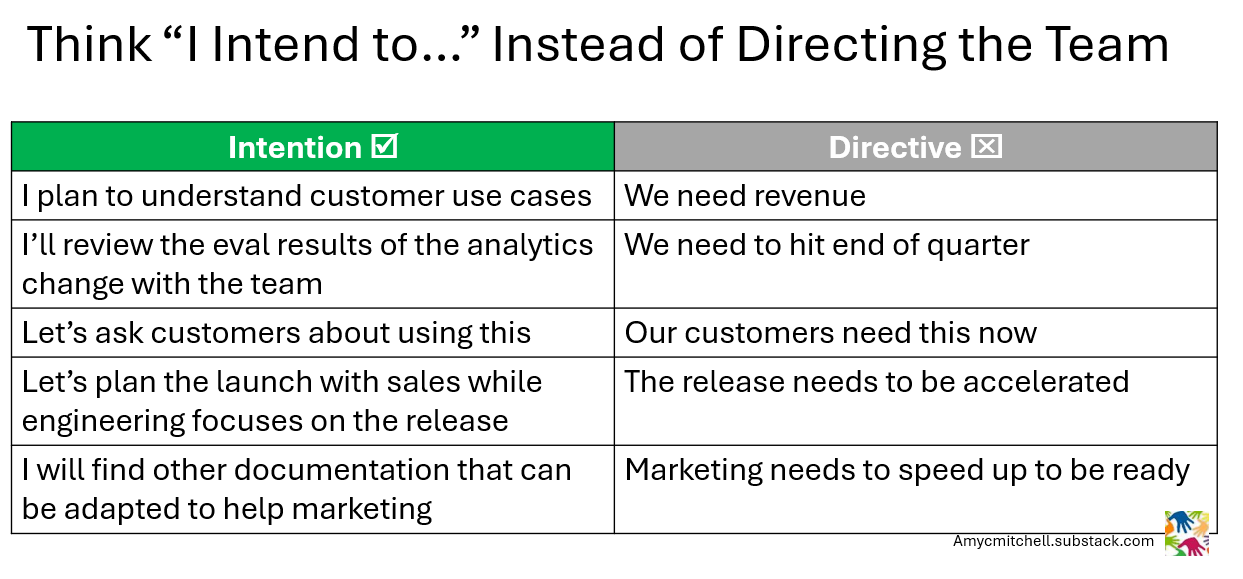
1. Lead with Intention, Not Directives
Ownership inspires. Directives don’t. By framing next steps as “I intend to” instead of “You need to”, you spark momentum instead of resistance.
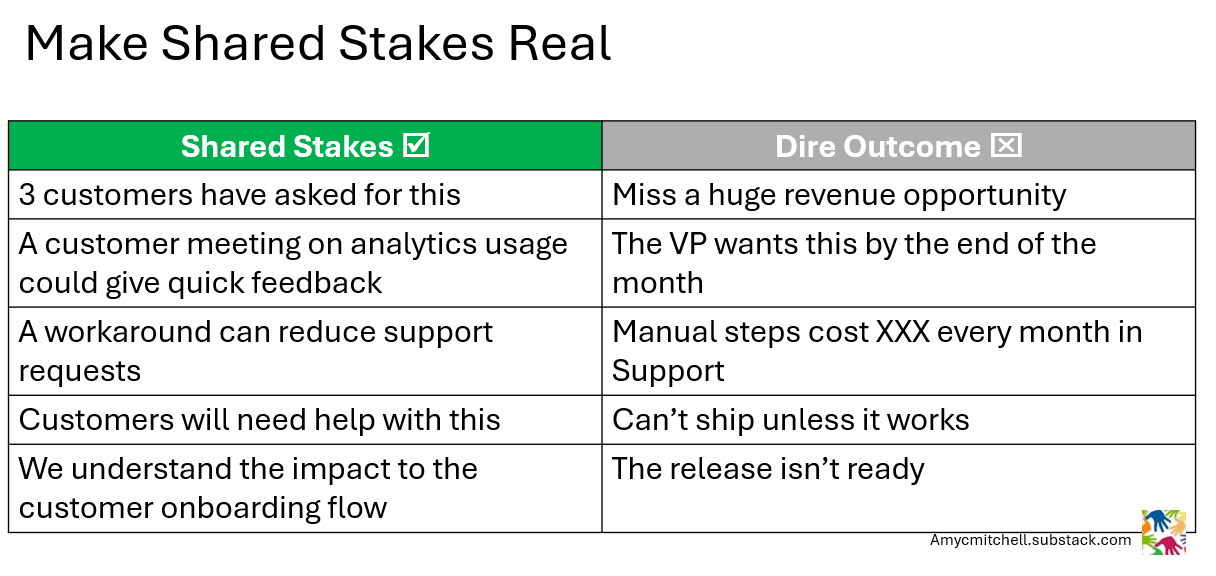
2. Make the Stakes Real
Revenue loss and executive pressure don’t move most teams. What does? Metrics, risks, or fire drills that hit their world. Translate big outcomes into consequences people actually feel.
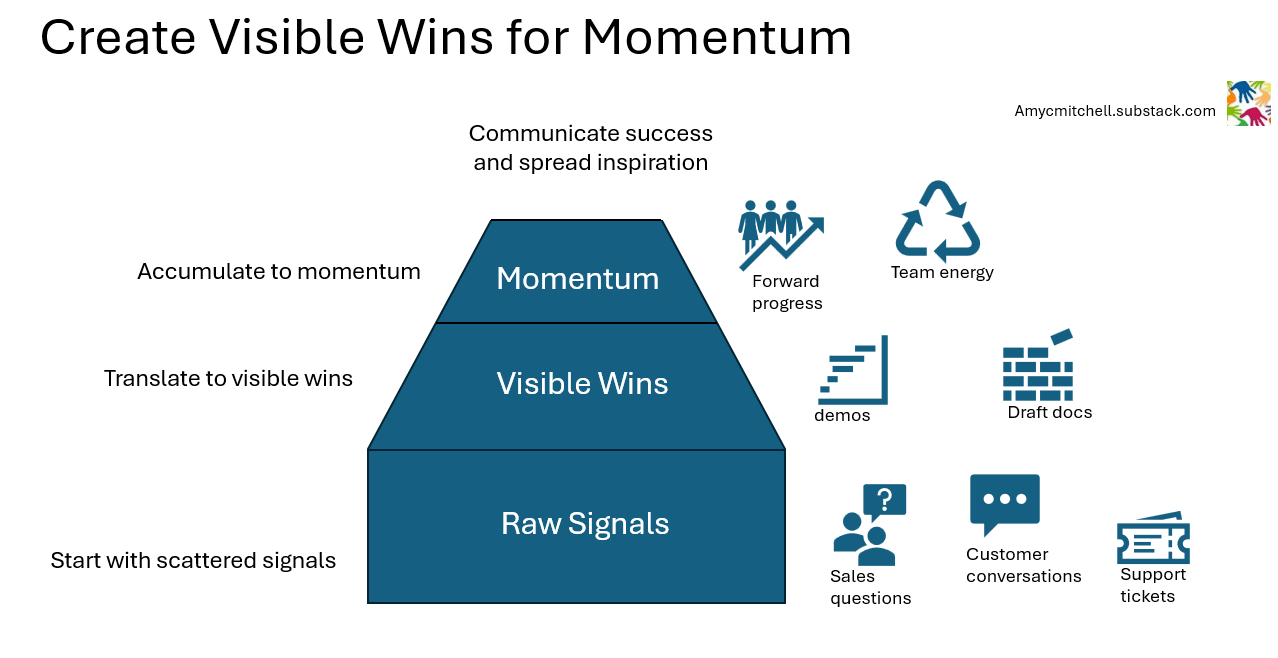
3. Create Visible Wins Early
Don’t wait for the big bang. Share signals of progress that link small steps to the larger vision. Even rough drafts, customer quotes, or sales questions create energy and credibility.
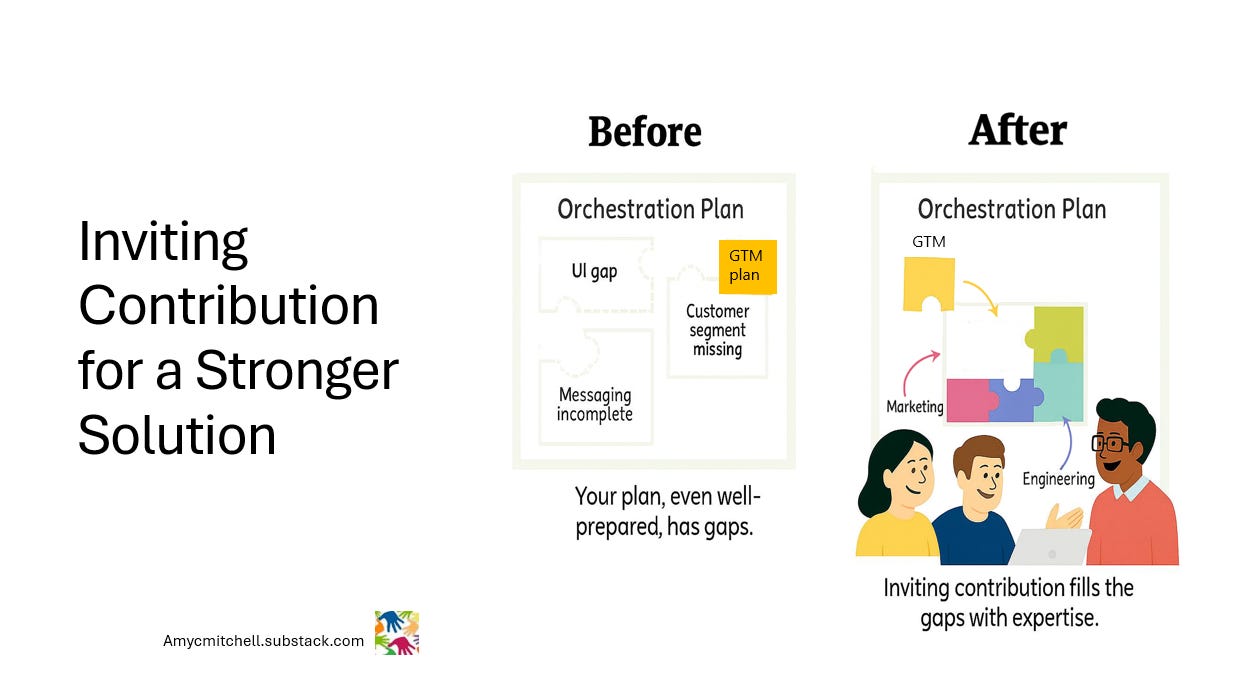
4. Invite Contribution, Not Compliance
Use your orchestration plan to spot gaps, then ask experts to make it better. Small-group sessions, eval planning, or demos are perfect places to invite creative input. People rally when they see their fingerprints on the solution.
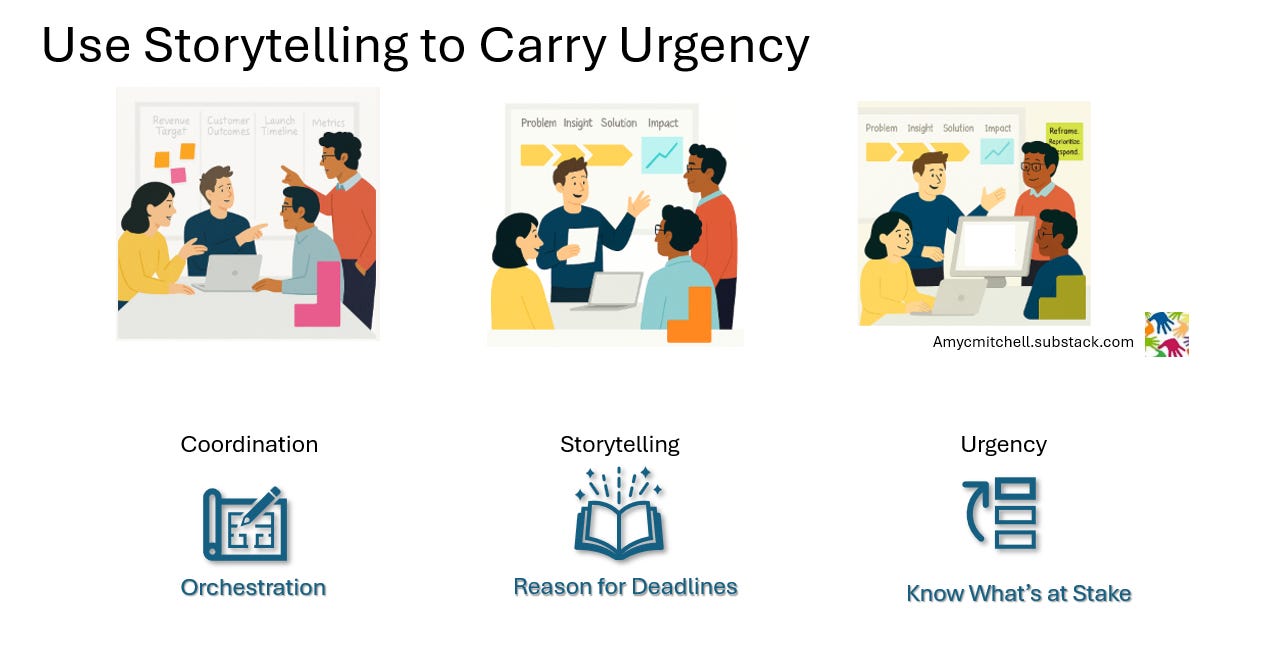
5. Use Storytelling to Carry Urgency
Deadlines don’t move people, but stories behind the deadlines can. Share the chain reaction: “Without UI changes in two weeks, customer evals stall, and we lose sales momentum.” Narratives create urgency where dates fall flat.
Reality Check: You Won’t Inspire Everyone
Not every teammate will light up at your vision. Some will just want to execute their part and move on. And not every orchestration effort needs inspiration. High-reuse items like APIs and documentation might be finished when needed.
Inspiration isn’t magic or charisma. It’s a learned skill: noticing what motivates different teams, practicing how you frame outcomes, and testing ways to connect urgency with meaning. The more you practice, the more natural it becomes.
Think of it like ripples from a pebble falling in water — subtle at first, hard to measure, but powerful as they spread.
That’s why you keep at it. Orchestration organizes the work. Inspiration, practiced over time, multiplies it.
Closing: Orchestration + Inspiration = Multiplication
Back to the VP who seemed fine with delay: the real problem wasn’t alignment, it was low inspiration.
When you combine orchestration with inspiration, you multiply results:
Setting out with purpose
Translating into shared benefits
Communicating early success
Inviting contribution
Storytelling urgency
Next time you orchestrate, don’t just think about who’s involved. Think about inspiring them to care. That’s when execution turns into momentum.
Like ripples in water, inspiration expands silently but steadily, multiplying the reach of your orchestration.
Related Links from Product Management IRL
Orchestration for product managers Building your orchestration muscles as a product manager.
Business fluency for product managers Delivering value and making it visible.
Making your progress visible Validating your progress as a product manager by finding signals.
Looking for more practical tips to improve your product management skills?
New Learning Path How to develop your strategy skills and exercise strategy in side projects (paid subscribers only)
Become a paid subscriber and get more weekly tips. Last week’s article: Can I Recover From a Mistake with Finance?
Premium Product Manager Resources (paid only) 3 learning paths, 6 product management templates and 7 quick starts. New items monthly!
Connect with Amy on LinkedIn, Threads, Instagram, and Bluesky for product management insights daily.
Any pointers or advice on «Orchestration across the org: How to» ?
Value in every paragraph. Awesome